
INTRODUCTION
For importers sourcing bagasse and areca palm leaf tableware in bulk, understanding Minimum Order Quantity (MOQ), container capacity, and freight optimization is essential for maintaining competitive margins.
When importing biodegradable tableware from India, pricing is influenced not only by FOB cost, but also by carton configuration, container utilization, and shipping structure. Whether sourcing molded sugarcane bagasse products or natural areca palm leaf tableware, container economics directly impact landed cost.
This guide explains how MOQ, container loading strategy, and bulk planning affect overall profitability for distributors and wholesalers. Importers new to sourcing from India may also review our complete guide to importing biodegradable tableware for a step-by-step overview.
Understanding Landed Cost
Importers should also verify correct tariff classification using the official Harmonized System framework managed by the World Customs Organization.
Before evaluating MOQ or container selection, it is important to understand the full cost equation.
Landed Cost = FOB Price + Shipping + Insurance + Customs Duties + Local Port Charges
Container optimization primarily reduces the shipping portion of this structure. Even minor improvements in cubic efficiency can significantly reduce per-unit cost.
Serious importers evaluate total landed cost — not just the quoted FOB price.
1. What Is MOQ in Biodegradable Tableware Exports?
MOQ (Minimum Order Quantity) refers to the minimum production volume required per SKU or per consolidated shipment.
MOQ depends on:
- Mold setup efficiency
- Production batch size
- Raw material allocation
- Carton packing structure
- Freight optimization
For export-grade biodegradable tableware, MOQ is typically structured as:
- Per-size MOQ based on production runs
- Recommended container-level MOQ for best pricing efficiency
Lower trial quantities are possible but generally result in higher per-unit pricing due to reduced production and freight efficiency.
2. 20ft vs 40ft Container Capacity Comparison
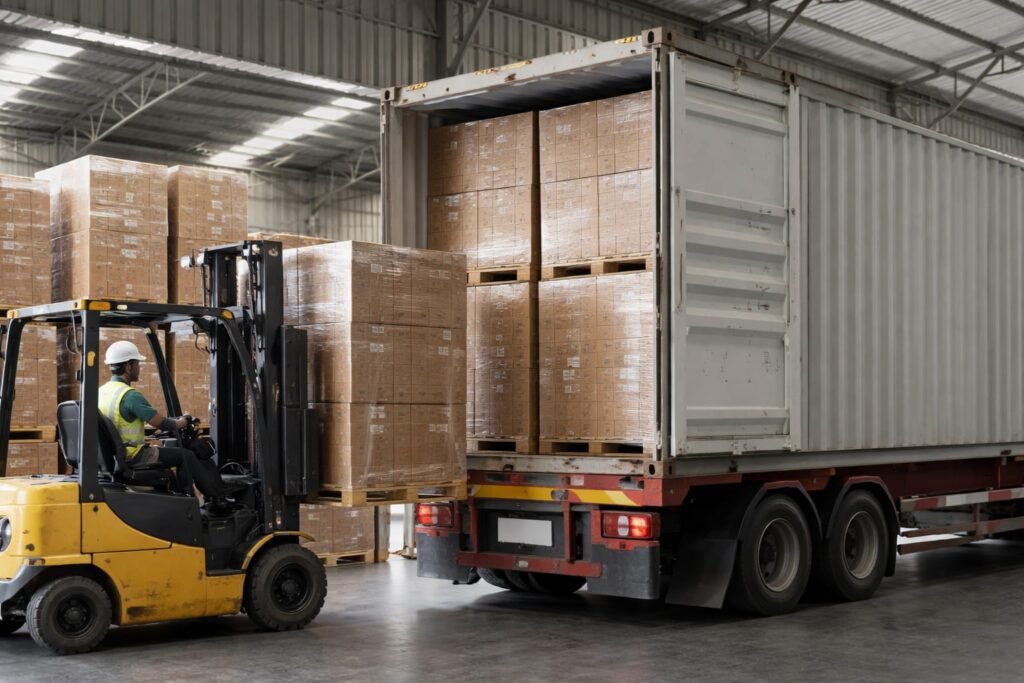
Container choice plays a major role in shipping efficiency.
Quick Comparison
| Feature | 20ft Container (GP) | 40ft Container (HC) |
|---|---|---|
| Capacity (CBM) | ~28–30 CBM | ~68–76 CBM |
| Ideal For | Trial orders / Limited SKU range | High-volume distribution |
| Cost Efficiency | Moderate | Maximum |
| Freight per Unit | Higher | Lower |
Established distributors usually prefer 40ft containers to achieve better freight-to-unit ratios and improved landed cost competitiveness.
3. Carton Configuration & CBM Optimization
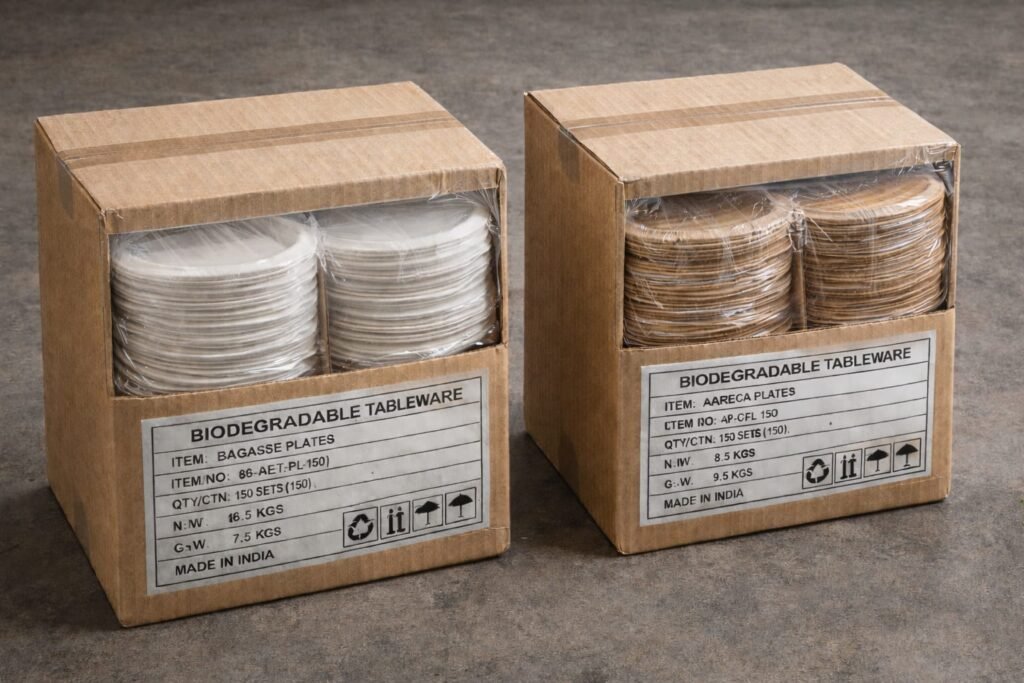
Freight charges are calculated based on cubic volume (CBM), not just weight.
Export-focused suppliers optimize:
- Standardized carton dimensions
- Strong corrugated packaging
- Efficient nesting of products
- Minimal void space inside containers
Bagasse tableware, due to molded nesting design, allows compact stacking and improved cubic efficiency.
Areca palm leaf products, being thicker and heavier, may slightly reduce container volume capacity but provide enhanced strength and premium positioning.
Proper SKU planning ensures balanced loading when combining both materials in a single shipment.
Optimized container loading can reduce freight impact by 5–15% per shipment.
4. Loose Loading vs Palletized Loading
Loose Loading
- Maximizes container space
- Lower freight per unit
- Requires manual unloading
- Common for wholesale shipments
Palletized Loading
- Faster unloading
- Suitable for structured warehouse distribution
- Slight reduction in total container capacity
- Preferred by organized retail importers
The decision depends on importer warehousing infrastructure and local logistics planning.
5. How MOQ Impacts Bulk Pricing
Higher order volumes reduce:
- Production setup cost per unit
- Labor cost allocation
- Packaging cost per unit
- Freight cost per unit
This creates a sliding pricing structure:
Higher Volume → Lower FOB Price → Lower Landed Cost
Lower Volume → Higher Per-Unit Cost
Distributors often plan recurring container shipments to maintain pricing stability and supply consistency.
6. Sample Orders & Trial Shipments
For new partnerships, importers may begin with:
- Mixed SKU consolidated container
- Smaller trial shipment
- Sample approval before bulk production
Clear MOQ understanding prevents unrealistic pricing expectations and ensures cost transparency from the beginning.
7. Production Lead Time & Planning
Typical production timelines for bagasse and areca tableware exports:
- Standard volume: 15–25 production days
- Custom branding: 25–35 days
- Peak season: extended timeline possible
Advance planning allows importers to align shipments with market demand cycles.
8. Strategic Advice for Importers
To achieve competitive landed cost when importing biodegradable tableware:
- Consolidate SKUs intelligently
- Plan around container-level orders
- Confirm carton CBM before freight booking
- Evaluate landed cost before confirming purchase order
- Schedule recurring shipments for pricing stability
Efficient container utilization often determines distributor profitability more than minor FOB price differences.
Conclusion
MOQ planning and container optimization are critical factors in the successful import of bagasse and areca tableware.
Importers who focus on total landed cost — rather than FOB price alone — gain stronger margins, improved freight efficiency, and better long-term competitiveness.
Strategic supply chain planning transforms biodegradable tableware sourcing into a structured and profitable operation.
About Sunwhale Exports
Sunwhale Exports is an export-focused supplier of bagasse and areca palm leaf tableware from India, specializing in:
- Structured MOQ planning
- Container-efficient loading
- Bulk distributor supply
- Compliance-ready export documentation
For wholesale biodegradable tableware sourcing, container planning support, or bulk export inquiries, contact our export team.