

Introduction
As global food service markets transition away from plastic, biodegradable alternatives such as bagasse and areca palm leaf tableware are becoming mainstream across Europe, North America, and the Middle East.
For importers and distributors, the decision between bagasse and areca is not simply environmental — it impacts cost efficiency, freight optimization, durability, compliance, and brand positioning.
This guide provides a structured comparison to help buyers evaluate the right material for their business model.
1. What Is Bagasse Tableware?
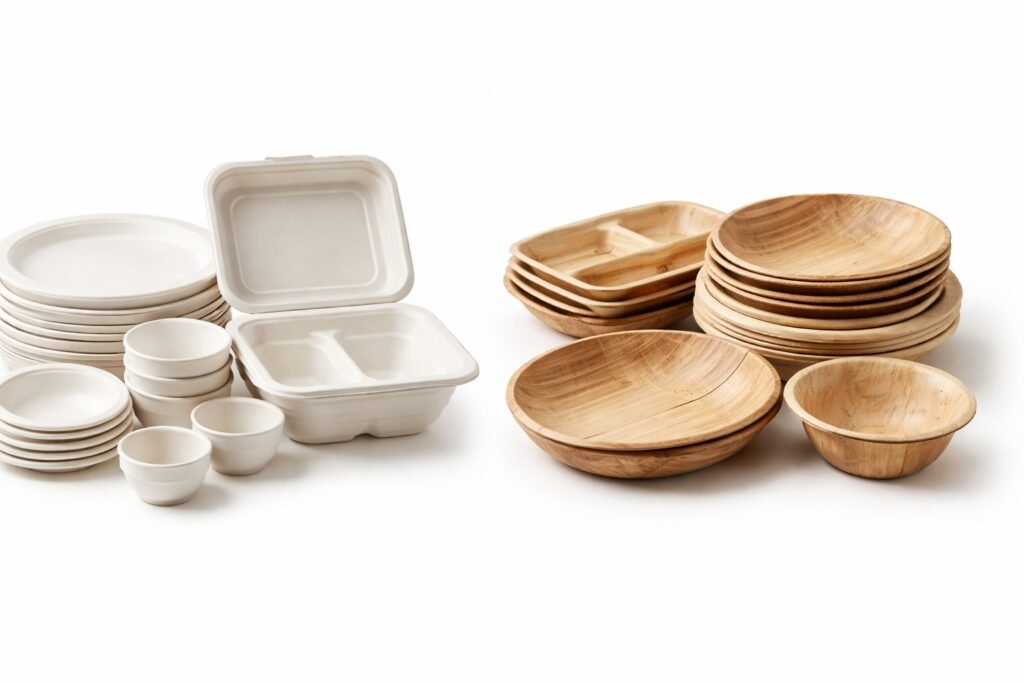
Bagasse tableware is manufactured from sugarcane fiber — a by-product of sugar extraction. The pulp is molded under high heat and pressure to create uniform plates, bowls, trays, and takeaway containers.
Key Advantages
- Industrially consistent shape and thickness
- Lightweight yet rigid
- Microwave and freezer safe
- Oil and grease resistant
- Suitable for automated packing lines
Best For
- QSR chains
- Supermarket private labels
- Airline catering
- Institutional bulk supply
2. What Is Areca Palm Leaf Tableware?
Areca tableware is produced from naturally fallen palm leaves that are cleaned and heat-pressed into shape. No pulp extraction or chemical additives are required.
Each piece retains a natural grain texture, giving it a premium, handcrafted appearance.
Key Advantages
- Thick and sturdy structure
- Natural insulation for hot foods
- Unique aesthetic finish
- Minimal industrial processing
Best For
- Premium catering
- Weddings and events
- Eco-resorts
- Boutique hospitality brands
3. Cost Comparison (FOB Export Perspective – India)
| Parameter | Bagasse | Areca |
|---|---|---|
| Raw Material Source | Sugarcane by-product | Fallen palm leaves |
| Production Process | Fully molded industrial | Heat-pressed natural leaf |
| Unit Cost | Generally lower | 10–25% higher depending on size |
| Carton Weight | Lighter | Heavier |
| Container Utilization | More optimized | Slightly lower optimization |
Export Insight:
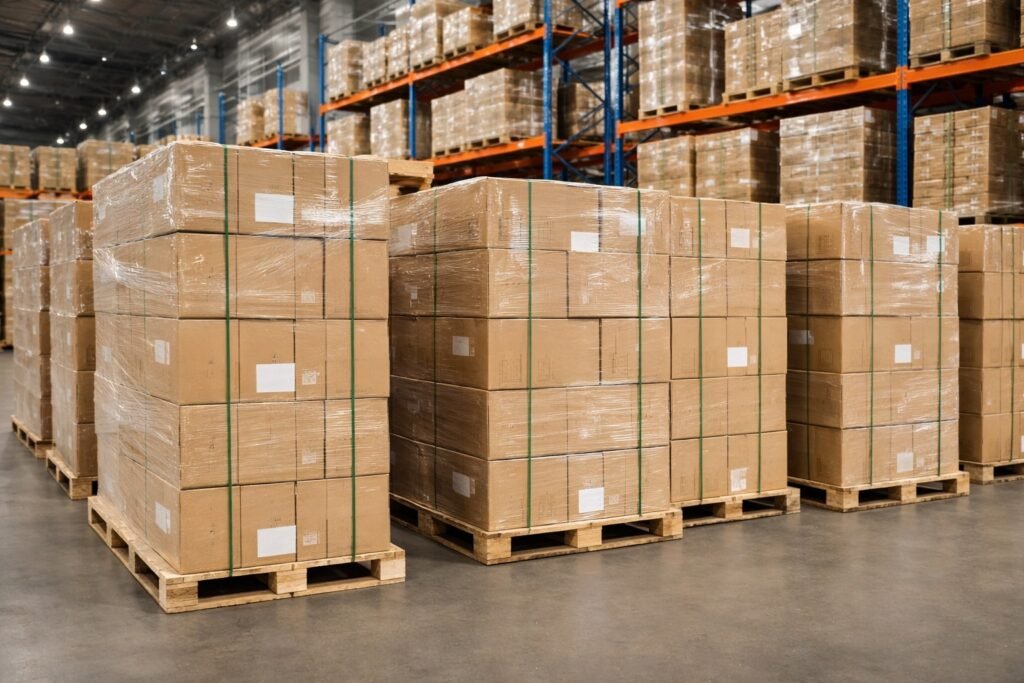
Bagasse typically offers better container efficiency and freight economics for large-volume shipments.
Areca carries a premium due to material thickness and sourcing limitations.
4. Durability & Performance Comparison
Heat & Oil Resistance
- Bagasse: Excellent for oily and takeaway foods
- Areca: Handles heavy food portions well but not ideal for liquid retention without lining
Structural Strength
- Bagasse: Strong and stackable
- Areca: Naturally thicker and more rigid
Shelf Consistency
- Bagasse: Uniform finish ideal for retail packaging
- Areca: Natural variation (visually appealing but not identical pieces)
5. Sustainability & Environmental Impact
Both materials are:
- 100% biodegradable
- Compostable
- Plastic-free
- Tree-free
Bagasse Sustainability Model
Utilizes agricultural waste from sugar mills, contributing to circular economy production.
Areca Sustainability Model
Uses fallen leaves without cutting trees, requiring minimal industrial processing.
Both meet growing global demand for eco-certified food contact materials.
6. Regulatory Compliance for Export Markets
Serious international buyers require proper documentation and verified compliance before onboarding new suppliers.
Common regulatory requirements include:
- FDA food contact compliance (USA) – Products entering the United States must comply with food contact material regulations under the U.S. Food & Drug Administration standards.
- EU food safety and Single-Use Plastics Directive compliance – Exporters supplying the European Union must meet food contact material requirements and align with the EU’s Single-Use Plastics Directive.
- Compostability certification (EN 13432 / ASTM D6400)
- SGS laboratory testing reports
- PFAS-free confirmation
Both bagasse and areca tableware can meet international regulatory standards when sourced from certified manufacturing facilities with proper documentation.
7. Which Should You Choose?
Choose Bagasse If:
- You require uniform industrial finish
- You supply retail chains
- You prioritize freight optimization
- You need scalable volume production
Choose Areca If:
- You target premium hospitality segments
- You require natural presentation aesthetics
- You focus on event-based catering markets
Conclusion
There is no universal winner between bagasse and areca tableware. The right choice depends on market segment, price sensitivity, freight structure, and brand positioning.
High-volume distributors often include both materials in their portfolio to serve multiple customer categories.
About Sunwhale Exports
Sunwhale Exports specializes in export-grade bagasse and areca tableware with a focus on:
- Industrial quality consistency
- Bulk container optimization
- International food safety compliance
- Structured packaging for global distribution
For product catalogues, FOB pricing, or sample requests, contact our export team.